How Thai Markets Actually Work, and Why a Rot Fai Is Not a Railway
Talat, rot fai, talat nam, wholesale and retail. The system behind every market in the country, and how to read one before you walk into it.
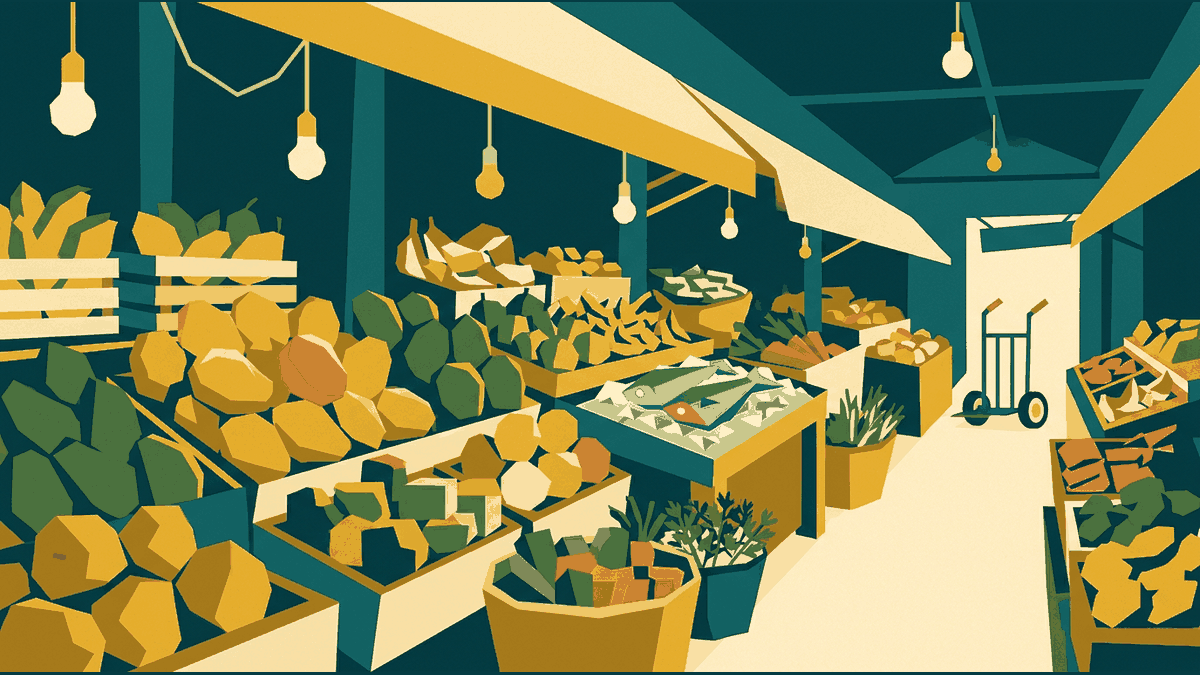
I spent a morning in Wang Lang market and bought the wrong fish. It was not bad fish. It was entirely the wrong fish for what I was cooking, and I did not know that fish was sorted by what happened to it next until somebody's aunt explained it to me over a pile of squid.
Markets in Thailand are not a collection of shops. They are a supply chain, and once you can see the structure the whole country becomes much easier to shop in.
Last verified 8 October 2026.
The two words, and why one of them is a railway
Talat (ตลาด) simply means market, and it means a permanent built one — a market hall, a covered street, a shopping mall shaped like a market. If somebody says talat and describes a building, that is what they mean.
Rot fai (รถไฟ) literally means "cart railway", and it is the old name for a night market. The carts ran on the rails that criss-crossed Bangkok in the 1970s and pulled up on the tracks after dark to trade. When the rails went, the cart trains went with them, and the name stayed.
So Talat Rot Fai Ratchada is not a railway station. It is a night market that used to be a cart train, sitting on Ratchadaphisek Road, and it is now mostly vintage clothing and furniture. Talat Rot Fai Srinakarin is the one where the interesting stalls are the weekend ones, and it is retro and nostalgic rather than local.
Talat nam means a wet market — nam for water — and it is the one full of produce. That is the category you care about if you want to eat.
The hours tell you everything
This is the single most useful thing to know, and it is on every listing:
A wet market closes in the early afternoon and is worthless at 4pm. Khlong Toei, the biggest fresh market in Bangkok, runs roughly 6am to 2pm and stops. Wang Lang, on the riverside near Siriraj, opens around 6am and is shut by 6pm. That is not laziness. The traders have been loading lorries since midnight and they have finished.
Night markets are a different product. Chang Klan, Ratchadaphisek, Srinakarin — these are evening events built on a tourist footfall, and they are shops. They are not where the food comes from.
Which is why a visitor who goes to the night market on the first night and eats well, and the local who goes to Khlong Toei at seven in the morning and eats better, are both right.
The flower market runs on a clock you would not guess. Pak Khlong Talat is a 24-hour market but it is at its busiest from about 7pm and at its most beautiful from around midnight to 6am, because that is when the jasmine garlands and marigolds for the morning's shrine offerings are being cut and bundled. Vendors there also assemble fruit trays and hotel arrangements. It is not a tourist market. It is a supply chain that happens to look incredible.
How to shop one without drowning
Go at the right hour, which for produce means before nine. By then the best has gone, the prices have not dropped much, and the aisles are impassable with porters.
Know that the price is not negotiable in a market that locals use. Wang Lang is not a place to haggle. If you haggle there you will get a worse price than paying what was asked, and a reputation that follows you around the market. Bargaining belongs at the tourist-facing stalls and in the handicraft villages — not in a wet market.
Carry small denominations and a bag you do not mind getting squid on. Vendors genuinely cannot break a 1,000 baht note at 6am, and this is the daily friction of a Thai market.
Ask mai rai (how much) and watch the reaction to the first number you say. If you offer 20 baht for something that is 60, the answer is not a negotiation. It is a lesson in the price of a market. Offer a realistic number and treat it as fixed.
Do not pick up the fish. Point, or better, take a photo of what you want and show the phone. This is completely normal and it removes the awkward conversation about what you intend to do with a live animal.
Which market for what
Khlong Toei for the real thing — the biggest fresh market in the city and the one that supplies a large share of it, 6am to 2pm, near MRT Khlong Toei. Look for pla raa, fermented fish, fish sauce sold from vats, dried shrimp, and fresh coconut cream pressed on the spot. Those four things explain most Thai cooking and none of them are in a supermarket.
Wang Lang for local food with almost no tourists, on the river near the hospital.
Pak Khlong Talat for the flower market, late.
Sampeng in Chinatown for wholesale goods, and the one market where you genuinely need to know what you want before you go in.
Talat Phlu in Thonburi, one of the oldest in the city and now known for street food.
The verdict
If you cook, go to a wet market at eight in the morning and not to a night market at nine at night, and you will learn more about Thai food in two hours than in two weeks of restaurants.
If you want a photograph, go to the night market, because they are built for that and they are good at it.
And if you want the version of Thailand that the market system is actually running on, stand in Khlong Toei at seven in the morning while the porters are still moving and just watch for twenty minutes. That is the bit that has not changed in fifty years, and it is the bit everybody comes here for and almost nobody stays to look at.



