Farm Stays Are Cheap Because the Work Is Real
You are not a guest at a rural homestay, you are a seasonal labourer with a ceiling fan. That is why it costs a tenth of a beach hotel and why it is worth more.
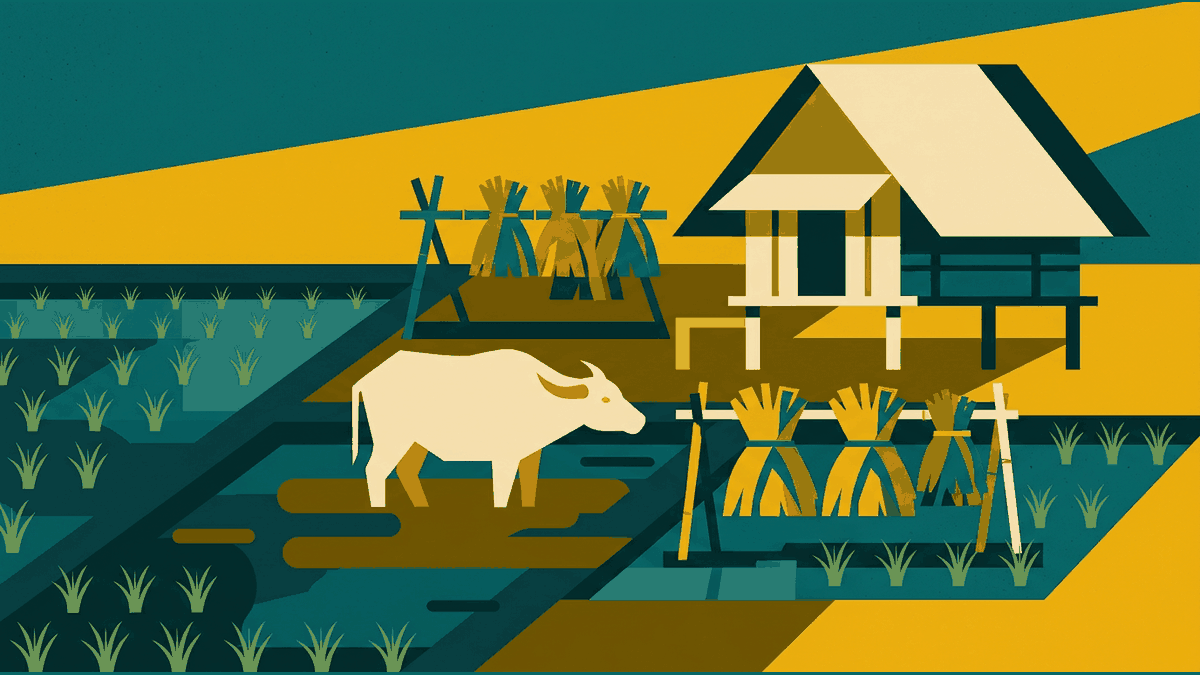
My alarm went off at five twenty on my third morning in Isan, not because anybody asked, but because the rooster started and I had run out of ways to pretend I was asleep. Downstairs the woman who ran the place was already feeding chickens, and she handed me a hoe and pointed at a field, and that was the arrangement, and it had been the arrangement since I arrived.
It cost me the price of a bowl of noodles a night. It was the most useful three days of that year.
Last verified 1 August 2026.
What you are actually booking
You are booking a room in somebody's house, in a village, where the household income is the thing you came to see. Not a hotel with a farm attached. Not a resort with a vegetable garden for the photographs. A household, usually extended, usually working, usually about four people to a room.
The room is basic and that is the correct expectation. A fan, a bathroom with cold water, a mattress on a floor or a thin bed, and shutters. Air conditioning is possible but on a farm it often is not, and that is partly why the price is what it is.
You eat what is cooked that day, which is the single best thing about the arrangement. The food is grown a few hundred metres away and it arrives at the table with an entirely different level of intensity from anything you can order in a city.
What the work actually is
In the wet season, it is transplanting rice, which means standing bent in mud up to your shin for four hours in the sun, holding a bundle of seedlings, pushing them into the mud one at a time, and being extremely bad at it.
At other times it is weeding, which is the same posture and worse weeds, or harvesting, which is bending over a combine's worth of dried stalks, or repairing something, or feeding things, or carrying water.
And this is the part that unsettles people, so let me be direct: you are not there as an observer. Nobody wants a guest standing politely at the field edge holding a hat. The host needs hands and the work does not care who does it. If you turn up and ask for a lighter day, you will get one, and the household will quietly absorb the cost, and your stay becomes a slightly awkward version of a hotel.
Nobody is going to shout at you. That is the social mechanism. In a household where the status difference between a guest and a worker is enormous and never stated, asking for less work is genuinely hard, and most people will simply accept the request and feel bad about it later.
How to find a real one
Ask someone who has been there, which is the only method that reliably works. Not a platform ranking, not a hotel site with photographs of smiling hosts and a listing that says authentic.
Look for a place with a name that is not a hotel name, no website, no English signage beyond what the owner put up themselves, and prices that are low enough to make you suspicious rather than excited.
And go for two nights minimum, three ideally. A single night is a visit. Three days is when you stop being a guest and start being useful, and it is also when the food, the conversation and the routine become the actual point.
Bring shoes you do not mind destroying, a hat, and more than one change of clothes. The mud in a rice paddy is not optional and it will find everything.
Where to go
The northeast is the heart of it, because Isan is rice-growing, dry, poor, generous and almost entirely unsuited to mass tourism. That last part is the reason the prices are what they are and the reason you are not going to be standing in a queue.
The north around Chiang Rai and Mae Hong Son has similar communities, and you are more likely to find English-speaking hosts there, which cuts both ways.
Anywhere the landscape is flat, wet, and full of irrigation, which in practice means the central plains and the river valleys. If you can see a mountain range from the field, you are in a different kind of farming and the rice rituals will not apply.
What you will not experience
You will not be shown anything. This is worth saying clearly, because the entire farm-stay industry runs on visitors expecting a performance of rural life, and the good ones are exactly the ones that refuse to perform.
Nobody will explain the rice cycle to you, because they are too busy in it. You will learn it anyway, by standing in it, at six in the morning, which is a better way to learn anything.
And you will probably eat the same thing for three days, because that is what a household eats. That is not a failure of hospitality. That is what hospitality looks like when the ingredients are what they actually grew.
Who this is not for
It is not for anyone who needs a reliable hot shower, air conditioning, or a firm checkout time, and it is genuinely not suitable for a first visit to the country when you are still working out how the ordinary parts function.
It is also not a volunteering opportunity, and I want to be clear about that, because a lot of these places blur it and some are not careful. You are not being charitable. You are paying to be useful, which is a completely different arrangement and a much better one.



