Pad Thai Is Eleven Ingredients and Most of Them Are Not Noodles
The dish everybody thinks they know is built on tamarind, fish sauce and palm sugar, and cooked in about ninety seconds in a very hot wok.
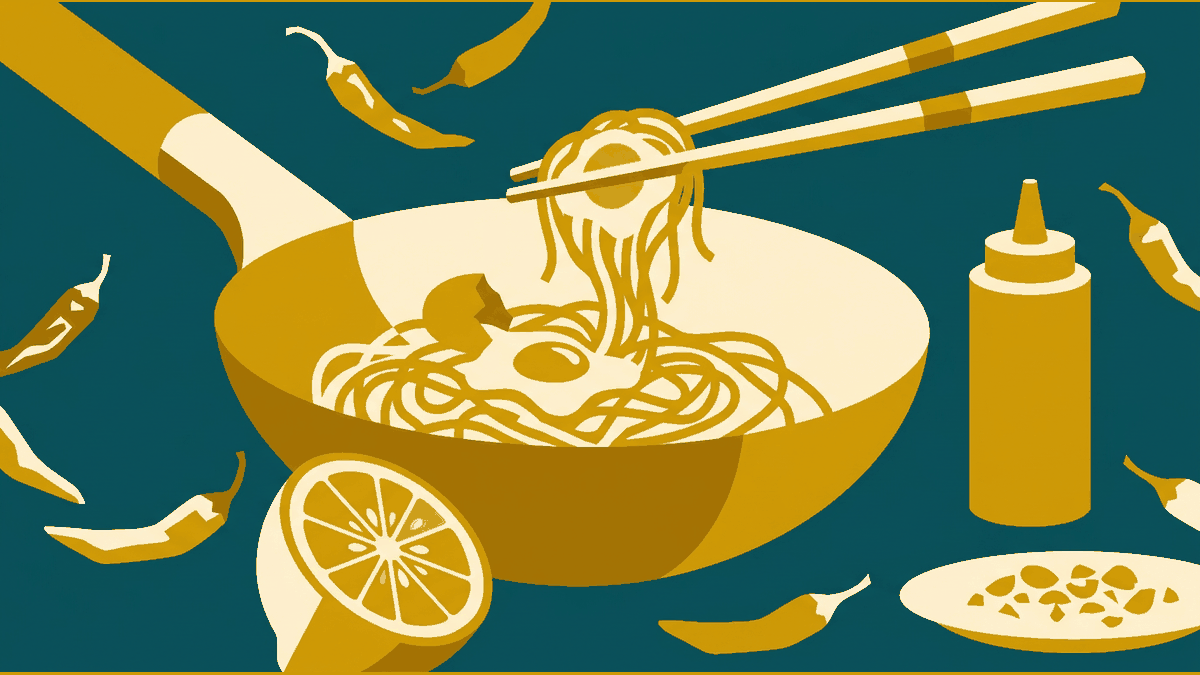
The first pad thai I ate cost thirty-five baht and was the best thing on the entire trip, and I did not understand it. It was not sweet, it was not thick with sauce, and it was faintly smoky in a way I could not place.
I spent a year of eating it in the wrong order before I understood the central fact, which is that pad thai is built on tamarind, and tamarind is sour. Every other version I had eaten in Europe and Australia was a noodle dish with a sweet sauce poured over it, and that is not the dish.
Last verified 30 August 2026.
The sauce is three things
Tamarind paste, fish sauce, and palm sugar. That is the whole liquid, and the skill is in the ratio rather than in the ingredients. The target is sour, salty, and sweet at once, with sour in front, because a plate of noodles needs acid to be interesting.
Commercial pad thai sauce, sold in a plastic bottle in supermarkets, is a different and much sweeter product. It is a legitimate thing to buy and it is not what the cart is making.
The noodles are the wrong noodles
It is rice noodles, and the width matters. The cart uses medium fresh rice noodles, which are soft, pale, and about four millimetres wide. The dish you have probably had is made with the wide, curly, bouncy instant noodle, which is a completely different food that happens to share a name.
Fresh rice noodles also come in three or four widths, and the cart uses whatever it has, so the dish is not identical everywhere. This is normal and not worth arguing about.
The egg goes in raw
Cracked into the wok before the noodles, and scrambled through them. You will see the cook tip the raw egg into the hot oil, let it set for a few seconds, then add the noodles and work them together. There is no omelette, there is no fried egg on top, and the egg is a seasoning as much as a protein.
Garlic goes in the oil first and takes about fifteen seconds before anything else does. If the wok is not hot enough, the garlic burns and the dish tastes acrid. If the oil is cold, the garlic is raw and the dish tastes flat. This is the entire technique and it takes ninety seconds.
The dried chilli is not the fresh chilli
The dried chilli in a pad thai is mild, smoky, and almost a different ingredient from a fresh green or red one. It is pounded with the garlic in some kitchens. The dish is not supposed to be hot, and if you want heat, the answer is the bird chilli at the table, not the plate.
The two fillings
Pork and chicken, and in a good cart also prawns. Default is usually pork. Tofu, dried shrimp and squid appear depending on the cart and the day.
Mai phak. No, not a lot, actually. Bean sprouts are a finishing garnish, not a vegetable. The default is a small handful. If you do not want them, the phrase is mai phak and every vendor in Thailand understands it.
How to order it
Say the dish, then the protein, then mai phak if you want it that way. Pad thai, moo for pork, hua for chicken, kling for prawns, and mai phak.
Ask for it to be not too sweet, or not too sweet and not too sour, and be prepared for the answer to be a shrug. A cart cooking ninety plates in an hour is not adjusting to your palate. The lime is where the adjustment happens.
Squeeze lime into it. Genuinely. A plate of pad thai is deliberately under-soured on the plate because the vendor is assuming you will finish the job. Almost nobody does, and almost everybody who starts doing it prefers the dish.
Peanuts go on top and are not decorative. If you cannot eat peanuts, say mai kin phat, do not eat, before the plate is made rather than after. The crushed peanut is a real component and a plate without it is a different, flatter dish.
Street cart or restaurant
The restaurant version is a different dish and it is worth one comparison. It is sweeter, more oiled, usually built from pre-cooked protein, often cooked in batches rather than to order, and it will sometimes be served with a different chilli entirely. It is a perfectly good plate of noodles and it is not what the cart is doing.
The cart version is thirty-five to sixty baht. The restaurant version is one hundred and fifty to three hundred. You are paying for a room, a tablecloth, air conditioning and the fact that nobody is cooking twenty of your noodles at once.
My rule: one street pad thai to find out whether you like it, then decide what to do about the restaurant bill. The dish is thirty-five baht. The relationship with pad thai you can have for the price of a plate of noodles and a bag of ice.



