Every Thai Toilet Has a Shovel and a Bucket and They Are Not a Joke
The bucket beside the pan is not decoration and the lever on the wall is not a light switch. A short tour of the most misunderstood room in Thailand.
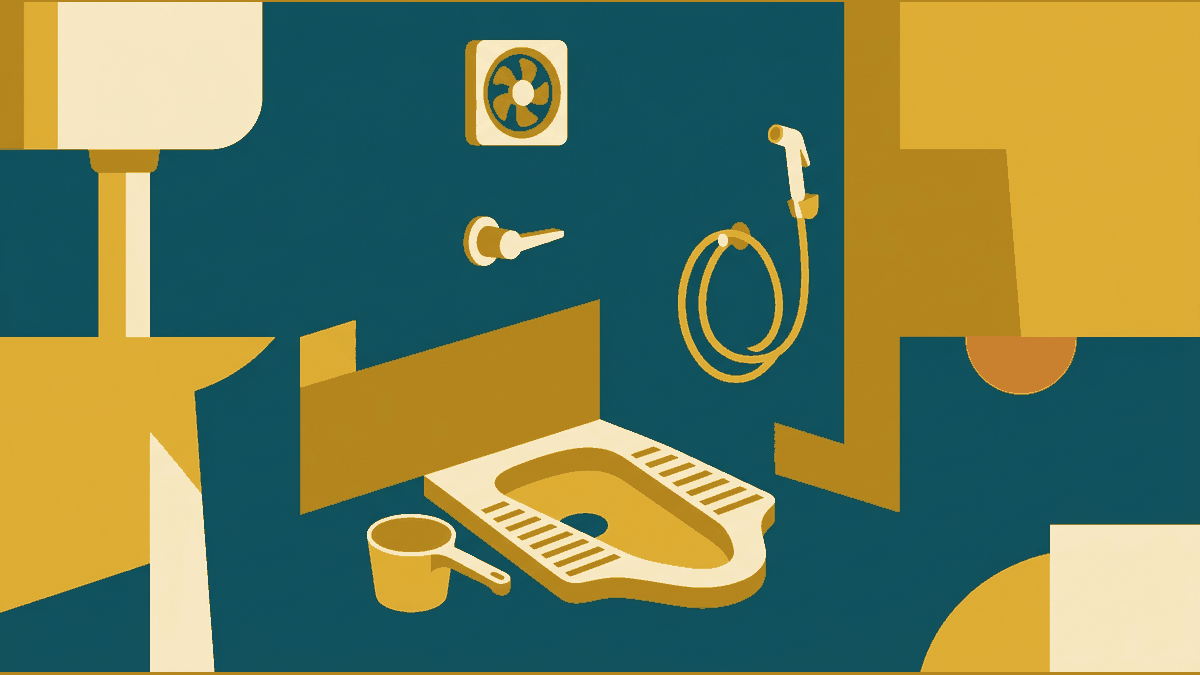
It took me three weeks in Thailand to notice the shovel. Not to use one, or even to see one on purpose. It was a small blue plastic thing about the size of a ladle, sitting on the floor next to the toilet in a guesthouse bathroom in Pai, and I walked past it for twenty-one days.
Then I watched a woman pick it up, fill it from a bucket, tip it into a squat pan, watch the paper disappear, rinse the scoop, put it back, and walk out. Total time, eleven seconds.
There is no flush button in that building. There never was. What there is, on the wall, is a lever, and the lever does not flush the toilet in the way you are imagining. It adds water to a small plastic tank that is meant to be lifted and tipped.
Last verified 2 September 2026.
The lever is not a light switch
Thai is unhelpful here because the word is prab nam, meaning adjust the water. It is a tap for the bucket tank, not a flush for the toilet. Visitors press it, wait for a small rush of water into a bucket, and then nothing happens, because the thing they are trying to flush is not connected to that lever.
There is a second button in older buildings, and it is not what you want either. It is called LCDC, from lor khat akat, roughly to surround the air with something. It is a small plastic deodorising fan stuck to the cistern wall, and it works by pushing a chemical scent into the room. It is loud, it smells faintly of artificial citrus, and on a night power cut it stops, which is when you notice it most.
Why the bucket is there, technically
Thailand's drainage pipes are narrow and the water pressure is low. This is a genuinely solved engineering problem rather than a poverty problem, and it is why the whole country settled on the scoop. A cistern would work and several newer buildings have one, but a cistern needs a float valve, a float valve needs water pressure, and a large proportion of Thailand has pressure that is fine for a shower and marginal for a flush.
So the country built a system around the constraint instead. A tank on the wall, a scoop, a bucket, and a pan with a shallow trap that only needs a small volume to clear.
The rule that follows from this matters more than the plumbing. Paper goes in the bin, not the pan. The bin beside the toilet, usually labelled nothing at all, is not a wastepaper basket. It is where the paper is supposed to go, and the scoop is rinsed into the same bin afterwards. A blocked sewer line in a Thai building is an expensive, filthy, days-long problem that involves lifting floor tiles, and every Thai person in the building knows this and has never seen it happen because everybody puts the paper in the bin.
What you will actually meet
The squat pan is still the default in public toilets, temples, parks, beaches, and older budget accommodation. The sitter is increasingly normal in newer hotels, mid-market places, and anything built after about 2015. In a private Thai home, a sitter is more likely than a squat pan, which surprises people who assume otherwise.
Temples usually have an attendant. A man or woman sitting on a stool by the entrance with a bucket, a scoop, and a small sign. He or she is there all day, they will hand you toilet paper, they will help if you need it, and a tip of ten to twenty baht is normal and expected. This is not a toilet fee and there is no price list. Hand over the money and take the paper.
There is a hose. A handheld bidet sprayer, called a chot, almost always plumbed to cold water only, on a flexible hose, mounted on the wall. This is the most useful object in the room and the one most visitors never find, because it looks like a shower fitting.
No soap. Not in the bowl of water, not in a dispenser, not anywhere. This is consistent across the entire country and is not an omission at an individual property. Carry a bottle.
The floor gets wet and the shower is in the bathroom. This is normal in Thailand and is not a cleanliness problem. You will stand in a small pool to wash, and there is a small raised shelf or step near the toilet specifically so you can put your feet somewhere dry while washing. In a hostel bathroom in Bangkok you may find a single plastic dipper used as a showerhead.
The four ways people get this wrong
Pressing the lever and waiting. You will get water in the bucket and no flush. Fill the bucket, use the scoop, rinse the scoop into the bin.
Putting paper in the pan. Read the previous paragraph on why. When in doubt, the bin.
Looking for a flush button that is not there and being convinced the toilet is broken. It is not broken. It is a scoop toilet. Nothing is wrong with it except your expectations.
Being embarrassed about the attendant. The tip is ten to twenty baht. The service is real. Handing over the money and taking the paper is the entire interaction, and everybody involved knows exactly what it is.
What is actually worth knowing
Carry your own tissues and a small bottle of sanitiser. The bin is there, the toilet is there, and the one thing that is genuinely never provided is the thing you need after.
Learn to use the sprayer in about four seconds. It is a small adjustment to your dignity in a public toilet and it is how most of Asia does it, and nobody in Thailand will think it is strange.
And if a toilet smells, the LCDC has probably failed. That plastic fan is the ventilation and the deodorising in one unit, and when the motor dies the room stops working as a system. It is not the sewer. Nobody has ever been poisoned by a Thai public toilet, and the smell that worries visitors is almost always this one machine.



