A Monkey Bite Is Not a Souvenir and the First Fifteen Minutes Matter
Macaques are wild animals with a very specific set of medical risks, and the fifteen minutes after a bite decide almost everything. Here is the order of operations.
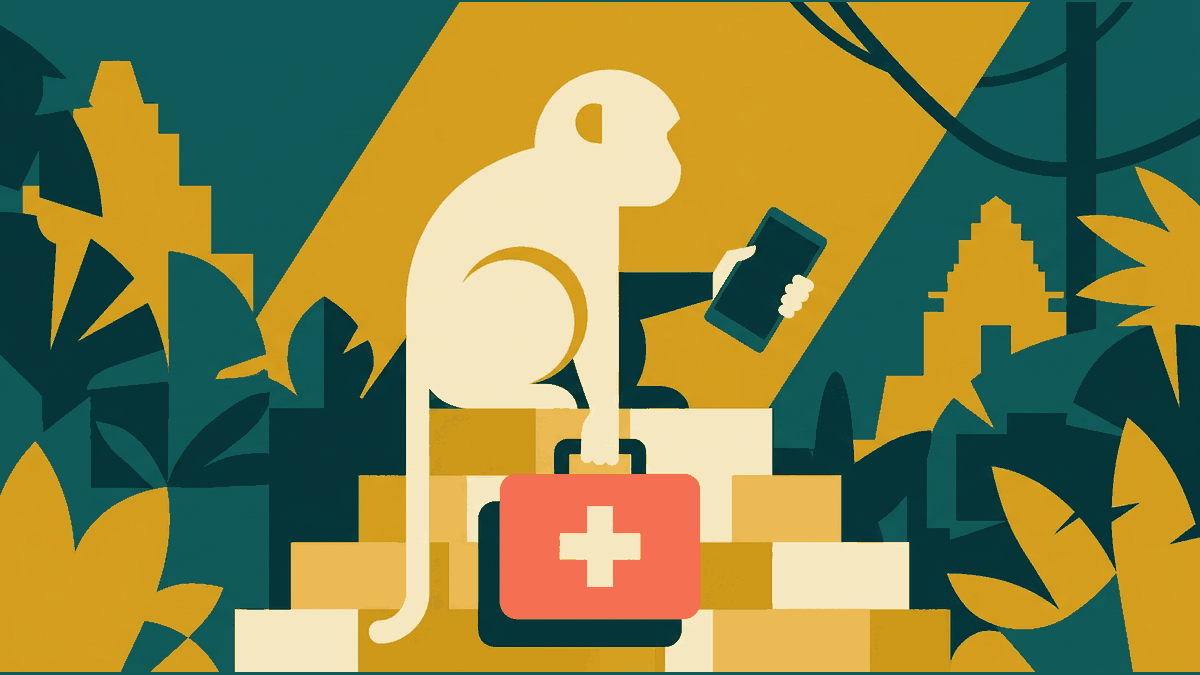
There is a bottle of water on the table at a viewpoint near Kanchanaburi. There is also a macaque, and the macaque knows the bottle is there, and the whole arrangement is a negotiation that has been running for years and that you are now walking into.
Almost nobody gets bitten. The people who do get bitten have, without exception in the cases I have seen, done one of about four things first.
Last verified 1 August 2026.
Why a monkey bite is not a joke
Rabies is present in Thailand, and macaques can carry it. A monkey does not have to look unwell. Many carry no visible signs at all, and the majority of macaques are not going to infect you, and the risk to an ordinary tourist who keeps their distance is genuinely low.
But a bite that breaks skin is treated as a rabies exposure until proven otherwise, exactly like a dog bite. Clinicians do not wait for symptoms. That is the whole reason this section exists, because the instinct to wait and see is the instinct that kills people.
And monkeys carry something else. B virus, formally macacine herpesvirus 1, is rare and it is serious, with mortality well over seventy percent if untreated. There is no vaccine for it. There is no test you can wait for. The only thing that helps is early medical assessment after exposure, and again, the only thing that triggers it is taking the bite seriously at the time.
What to do, in order
Step one: get away from the group. Macaques travel in numbers and a monkey that is bold at a bottle is bold at your bag, and possibly at your hand. Do not start a fight over a phone.
Step two: wash the wound for fifteen minutes with soap and running water. Fifteen minutes. Not thirty seconds, not a quick rinse while you walk to a clinic. Set a timer if you have to.
Soap is doing real work here rather than being symbolic. It physically disrupts the virus, and this is the single most effective thing you can do before you see anyone. Both rabies and B virus are inactivated by thorough washing with soap, which is why this step is so specific and so long.
Step three: apply iodine or alcohol if you have it, then leave the wound open or lightly covered. Do not tape it shut. Do not put a tight bandage on it.
Step four: go to a clinic the same day. Not tomorrow. Not when it gets sore. Same day, for wound assessment, tetanus check, antibiotic cover, and rabies post-exposure treatment. Post-exposure treatment given promptly is close to one hundred percent effective, which is a genuinely remarkable fact and the reason this is a solvable problem rather than a tragedy.
If it has been more than twenty four hours, still go. There is no hard cutoff at which it becomes pointless. Come in and let a clinician decide.
How serious is the bite itself
Where you are bitten changes the risk. Hands and faces are treated more seriously, because the nerves are close to the brain there and there is less tissue to work with when the wound is deep.
What kind of contact you had also matters, and this is where most of the anxiety is misplaced. A monkey touching you through intact skin is exposure category one and needs nothing. A scratch that does not break the skin also needs nothing. A scratch that breaks the skin even slightly is a real exposure, because claws carry saliva from grooming.
A bite is the highest risk category, along with saliva reaching broken skin or the eyes, nose or mouth. If a monkey licks an open cut on your hand, that is a genuine exposure and nobody will think you are neurotic for going to a clinic.
If you had the rabies vaccine before you travelled, treatment is much simpler. Two booster doses and no immunoglobulin. This is the strongest argument for pre-exposure vaccination if you are spending weeks in places with monkeys, which is most of the hill country.
How not to get bitten
Do not feed them. This is the whole thing. Everything else on this list is a footnote. A monkey that has learned to associate humans with food becomes bold quickly and permanently, and the individual animal you fed is usually not the one that bites you. The whole troop changes.
Do not make direct eye contact, and do not bare your teeth. Both are threat signals to macaques, which is why the stare-down at a temple gate feels so much more loaded than it looks.
Do not run. If a monkey approaches, stand still, break eye contact, and back away slowly.
Do not keep your phone, sunglasses and drinks in your hand. Loose shiny objects are the thing they go for. Put a bag down, let a monkey take it, and buy another one. A phone is replaceable and a rabies course is not.
And if a monkey climbs onto you, do not pull away hard. Let it take whatever it wants. This is counter-intuitive and it is the correct response, because a sudden movement turns a theft into a struggle and a struggle is a bite.
Where this actually happens
Lop Buri is the place people mean. The ruins at Phra Prang Sam Yot have hundreds of macaques living in them and they are completely habituated to humans. It is genuinely a great site and it is also the highest volume of monkey bites in the country, largely because it is on the way to a lot of other places.
Hill viewpoints across the north and west have small troops that have learned the same lessons from the same visitors.
Bangkok is low risk but not zero, with occasional monkeys in places like Lumpini Park and around some canal-side temples.
Dog bites are the bigger problem in Thailand, by a considerable margin. I would rather you knew that, because it changes where your attention goes. The monkeys are the ones who photograph well.



