The Food You Are Eating Is Not Actually Thai Food Unless You Go East
Central Thai is what the world learned. Isan is what the country eats. A region-by-region map of the actual differences, and why the menu in Bangkok is not the national cuisine.
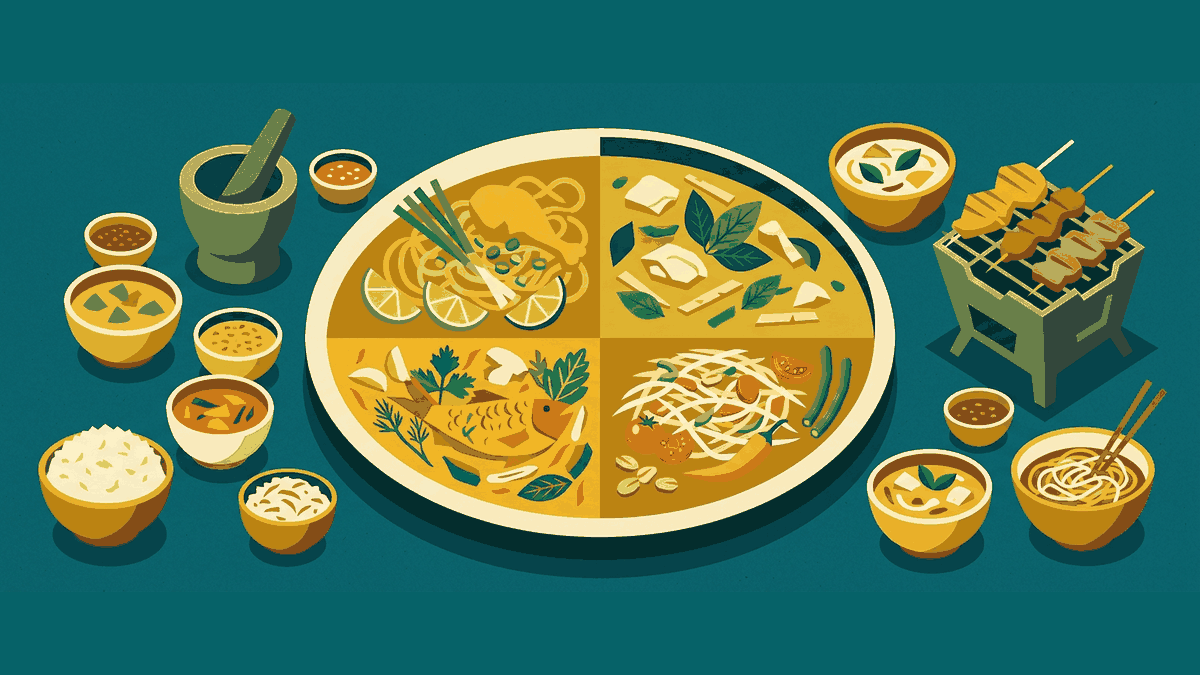
Here is a test. Go to a Thai restaurant in London, Sydney or San Francisco. Order what they tell you is "Thai food". It is almost all central Thai: pad thai, green curry, tom yum, massaman.
Then go to Khon Kaen and eat what people there actually eat.
You will not recognise the country.
Last verified 4 October 2026. Regional boundaries are soft, and what I am describing is the general shape rather than a set of rules.
Isan built the national cuisine out of shortage
The northeast is a fifth of Thailand's land and a fifth of its people, and almost nobody visits it for the food. That is a mistake, because Isan cooking is the foundation most of what the world calls Thai food is built on.
It came from scarcity. Dry seasons, poor soil, a river system that dries out, and no access to the sea. So the region fermented: fermented fish sauce (pla ra), fermented soybean, fermented rice, salted and smoked meats. Preservation techniques that were survival became an identity.
The order you should learn is this one:
Som tam pla ra — green papaya salad built on fermented fish instead of the sweet, mild version the rest of the country serves. It is saltier, funkier, and it tastes like a completely different dish.
Larb — minced raw meat, toasted rice powder, chilli, herbs. Regional versions exist for beef, pork, duck, buffalo and fish, and restaurants proudly name them: larb Khon Kaen, larb Udon, larb Yaso. It was historically a dish made for guests, served at weddings, funerals and merit-making, when an animal was slaughtered and the whole village ate. That is why it is hospitality, not a salad.
Nam tok — grilled pork, sauce, crispy rice, a pile of raw herbs. Drunk as an appetiser, used as a topping, eaten at every party.
Gai yang — grilled chicken, the default Isan protein, on sticky rice.
Jim jum — a pot of herbs, chilli paste and pork rib that exists to be shared.
And the reason the rest of the country tastes the way it does: som tam travelled out of Isan on a truck and became a global export. The papaya salad in your local Thai restaurant is an Isan dish that got popular and then got softened for people who did not know what it was supposed to taste like.
The north is quiet on purpose
Northern food, the Lanna table, is the mildest of the four. Less sugar, less chilli, more slow-cooking — and the reason is geography. The north sits between Myanmar and Laos, so Shan and Chinese technique leak in, and the food reflects a mountain climate rather than a delta one.
Order nam prik noom (roasted green chilli and shallots, pounded) and nam prik ong (the same with tomato and pork) as a table for one. Add khao soi, which is the region's signature and technically brilliant — a curry noodle soup with both crispy and soft noodles in the bowl, which is a texture idea that no other region attempted. Then sai ua, the northern sausage, which is herby and faintly smoky and nothing like what tourists assume sausage means.
The Chiang Mai traveller's mistake is ordering only the tourist version of the north. The gaeng hang lay, the pork rib broth, and the nam prik table are the actual food.
The south is not a Thai food region and does not care
Down the peninsula you are closer to Malaysia, and the food shows it. Southern Thai food is the only place in the country where coconut is a default rather than a special occasion.
You get gaeng tai pla, the Andaman curry, which is turmeric-orange, hot and sour in a way central Thai curries never are. You get kua kling, the dark fish-based broth from Nakhon Si Thammarot that owes as much to Penang and Peranakan cooking as to anything on the Bangkok menu. You get the Chinese-Thai cooking of the Andaman coast, which is a completely separate tradition with its own noodle soups, its own roast duck, and its own entirely different idea of what a restaurant is.
Hat Yai is technically in the south and behaves like a different country. If you only eat one meal in southern Thailand, eat it there rather than on a resort.
The middle, which is what everyone thinks is everything
Central Thai is the cuisine with the best PR: noodle dishes, coconut curries, the sweet-sour profile, the elaborate ceremony of a krathong of sauce and carved garnish on a plate. It is genuinely good and it is one region of four.
The reason it dominates is not that it is best. It is that it is what leaves the country: the restaurants in every capital city on earth are central Thai plus a pad thai and a green curry, and the region that sends the food out is the region that becomes the definition.
One meal, if you take nothing else from this. Eat Isan food. Not a Bangkok restaurant that serves one som tam. Actual Isan food, somewhere the woman at the next table is from Ubon Ratchathani. That is the closest thing to the national dish that Thailand has, and it is the thing the export got wrong.
Where to actually eat it
Isan — Khon Kaen, Udon Thani, Nong Khai, Ubon Ratchathani. The food in these four cities is a category of its own, and the night markets are the reason to go to any of them.
North — Chiang Mai is good, but Nan is better if you want the regional food without the tourist menu. Do both.
South — Nakhon Si Thammarot, Hat Yai, Satun, and the old streets of Phuket town rather than the beach clubs.
Central — you are already in the middle of it. Nothing to add.